
Written By Luke DeRenzo / Laboratory Analyst 1
In our previous blog series dedicated to USP <671>, we outlined the multiple moisture permeation test methods used to assess a package system. Although the central idea of these test methods focuses on the container system itself, key aspect of permeation testing is the use of desiccants. Failure to couple USP <671> with a well-suited desiccant could confound measurements and results. Desiccants primarily serve to collect and trap moisture, which inside of a package system under test, provides the ability to capture water vapor transmission through a barrier, also referred to as permeation.
Whether it is for a multiple-unit container for Methods 1, 5, or 6, or a unit-dose blister card for Methods 2 or 7, the desiccant is what keeps the low-humidity domain inside the package system, establishing the relative humidity gradient between the inside and test storage environment that is required for this test method. Understanding the molecular function of a desiccant, the reason for its conditioning, and how they interact with water vapor is imperative to understanding USP <671>.
What Is a Desiccant?
The answer to this question is quite simple: A desiccant is a substance or material that can withdraw moisture from its surroundings. In the case of USP <671>, desiccants are the sole reason that the measure of moisture transmission through a container remains possible. When moisture enters the system in question, it is absorbed by the desiccant, allowing for weight gain that can be measured. It is this weight gain that is fundamental for determining Moisture Vapor Transmission Rates (MVTR) or compliance to acceptance criteria.
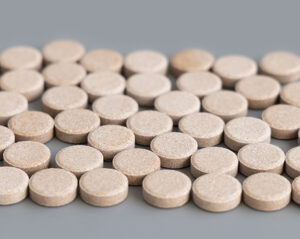
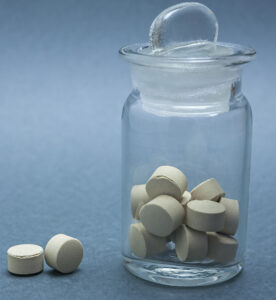
The two most common forms of desiccants utilized in USP <671> test methods are anhydrous calcium chloride and molecular sieve-based unit-dose desiccants. A unit-dose desiccant is constructed from a mixture of zeolite molecular sieve and mineral clay that is molded into a small, cylindrical shape suitable for blister cavities.
Why Do Desiccants Absorb Moisture?
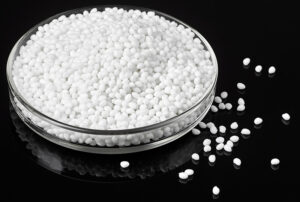 The idea behind moisture absorption is entirely thermodynamically driven. Water molecules have a natural tendency to move to substances that have a high affinity for water. This leads to water vapor being taken from the environment. Anhydrous calcium chloride (CaCl₂) is one of the most prominent types of desiccants used because it is both hygroscopic and deliquescent. This means that it is extremely good at attracting water vapor (hygroscopic) and can also retain enough moisture to completely dissolve into a liquid form (deliquescent). Depending on the surrounding climate, calcium chloride has an absorption capacity such that it can hold 200% to 300% of its basic weight in water. This means for every 100 grams of anhydrous calcium chloride in a given system, it can capture 200 to 300 grams of moisture.
On the contrary, the molecular sieve desiccants that are paired with blisters are a little more complex. Molecular sieves are synthetic zeolites, which are crystalline aluminosilicate substances that have a well-ordered grid of microscopic pores. These pores all have the same dimensions and have diameters measured in angstroms. The purpose of the pores is to increase the surface area-to-volume ratio, allowing water molecules to adsorb easily. This differs from calcium chloride: calcium chloride integrates moisture into its entire structure, where a molecular sieve integrates it via a lattice of pores.
Even though molecular sieves have a lower adsorption capacity than calcium chloride (about 20% to 25% of their base weight), they are extremely effective at adsorption, even at lower humidity levels. Because of this, molecular sieves thrive in dry conditions, making them suitable for permeation testing under USP <671>, especially for high barrier blisters.
Why Must Desiccants Be Dried Before Testing?
It is crucial to USP <671> test methods that the desiccant in question begins in an anhydrous state. Exposure to humid conditions for an extended period can reduce the desiccant’s overall capacity to hold moisture, which can then directly affect the results of the study.
USP does offer information to address this issue. For anhydrous calcium chloride, drying at high temperatures ensures the complete removal of any water vapor that was absorbed into the bulk state. Similarly, a molecular sieve desiccant must have a weight that is approximate to its certified dry weight, a measurement that becomes accurate when dried at high temperatures. Ultimately, dry desiccants create a safe starting condition and undoubtful data that is reproducible and reliable. Pre-saturated desiccant may not have sufficient capacity.
A Simple View of Moisture Transfer
 At its very core, USP <671> permeation testing exhibits the theory behind mass transfer. Water vapor tends to migrate from areas of higher concentration to areas of lower concentration. During the testing, the environment is purposely kept at a high humidity while the system in question is kept at low humidity by the desiccant. The change in water vapor concentration is what drives the moisture to continue to transmit through a boundary. Molecules of moisture first collect on the system’s outer surface, slowly diffuse through material, then enter into the package itself, where it interacts and is absorbed by the desiccant.
This process can be summarized in three crucial steps:
- Moisture encompasses the outside of the packaging system
- Moisture penetrates the worst-case scenario barrier (i.e. closure, liner, bottle wall)
- The dried desiccant accepts the moisture getting through and sustains the low humidity environment as well as the concentration gradient
In the absence of desiccant, the interior of the package system would become increasingly humid. If the concentration gradient declines across the barrier, the means for permeation transfer are erased and the validity of the test decreases. The desiccant is the concentration “sink” that prevents the moisture from reaching a thermodynamic equilibrium.
More Than Just a Drying Agent
From a surface level, a desiccant is just a substance put inside a packaging system. However, by uncovering the functionality behind desiccants, we’ve highlighted their role in these types of experiments. The use of anhydrous calcium chloride or molecular sieve ultimately yields the same goal. Through their capture of water vapor, a desiccant is what gives USP <671> its reliability to effectively determine the packaging systems barrier capabilities.